|  KAMWENGE INITIATIVE FOR DEVELOPMENT ORGANIZATION KAMWENGE INITIATIVE FOR DEVELOPMENT ORGANIZATION
CREATING AWARENESS AND WELFARE IN RURAL VILLAGES
|
|
|
| | | | | |
|
What do we do? / Our programs.
KIDO under takes programs in the following thematic areas as reflected in its strategy for 2014-2015.
• Agricultural transformation from subsistence farming to commercial farming and Sustainable livelihood (roll out of VSLA and food security programs
• Promote health with emphasis to primary health care, HIV/AIDS (prevention, care and support activities).
• Maternal health programs i.e. reducing the infant/ neonatal mortality.
• Child protection, i.e. roll out of children rights, empowerment, and support.
• Promotion of fundamental Human Rights.
• Climate change mitigation (promoting climate justice).
Besides the above sectors we also cut across programs like child rights/ Fundamental Human Rights, HIV/AIDS, gender, environmental education, water and sanitation, and sexual reproductive health.
Core areas under livelihood include:
Sectional interventions
under this sector are based on background that 59% of the HH’s in Kamwenge and Kampala Districts eat only one meal a day Kamwenge initiative for development organization (KIDO) base line survey 2012.
• (KIDO) has made a big difference in lives of the children/Marginalized people. Kamwenge initiative for development organization (KIDO) boosts of 6000 VSLA groups in Kamwenge 75% members being women. Most of the members have been able to jump the poverty line as the result of these interventions. In Uganda 23% of the population are below the poverty line/Uganda Bureau of Standards 2010 (UBOS). Through VSLA Kamwenge initiative for development organization (KIDO) has reached 9000 women and 6000 men.
Agriculture.
• Food security: empowering communities in sustainable agricultural development through training farmers in modern methods of farming. This is going on in kahunge, Rukunyu, Bihanga , Kabuga in Kamwenge district and similar intervention s are expended to start in 2015.
Kido member in Bihanga parish Kamwenge district, prepare his garden using oxen plough. Such appropriate technology is one of our efforts/ strategies to transform subsistence farming to commercial Agricultur
Oxen farming in Bihanga.
Kido executive director poses in a photo with some members. Abject poverty reduction is one of our key goals to achieve by 2017.
HIV/AIDS MAIN STREAMING.
This plan recognizes that HIV/AIDS is a major concern that affects development across all sectors in the district. It is therefore important to understand the interrelationships HIV/AIDS has on development.
HIV/AIDS impacts on Local Governments through Loss of trained personnel, over burdened health sector and increased number of orphans. Kido has done the following to reduce the spread of HIV and AIDS.
• Preparation of work-plans and budgets; which consider cross HIV/AIDS issues
• Advocacy aimed at protecting the disadvantaged from being exploited
• Continue to sensitize and give communities information on HIV/AIDS
• Evolve community based care to supplement Health Centre’s
• Advocate for mutual faithfulness among married or cohabiting partners and use of a condom.
• Encourage collaboration with the NGO’s involved in HIV/AIDS activities such as ADRA Uganda, Parents Concern, and Samaritans Purse.
• Trained counselors on the scourge to be in position to assist people.
• Advocated against negative attitudes towards the sick like stigmatization loot and exploitation.
• Advocated for abstinence, behavioral change be faithful to your partners etc
• Encouraged testing for HIV/AIDS sero status
• Avoid sex outside marriage
Maternal Health:
Kido Contribute to the attainment of a significant reduction of morbidity and mortality due to the sensitization programs in health and unhygienic practices and other environmental health related conditions.
As a result there has been
• Reduction of morbidity and mortality due to diarrheal diseases.
• Reduction of the morbidity, mortality and transmission of tuberculosis.
• Reduction of the morbidity and mortality rate due to malaria in all age groups.
• Reduction of morbidity caused by the worms by decreasing the worm burden among communities
• Reduction of morbidity and mortality due to Leishmaniasis among the endemic communities
Reduce mortality and morbidity relating to sexual and reproductive health & rights
Prevent morbidity and mortality due to gender based violence. Improve newborn health and survival by increasing coverage of high impact evidence based interventions, in order to accelerate the attainment of Millennium development goals
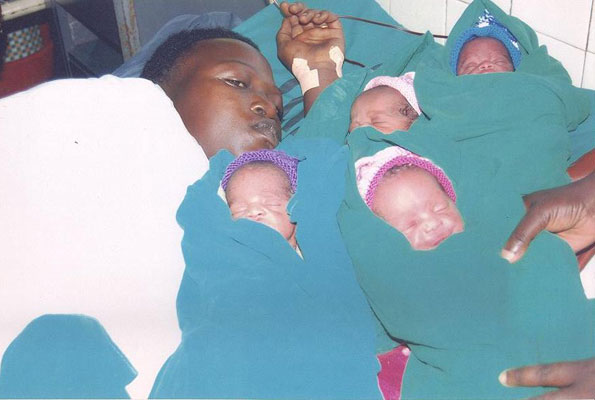
Despite a significant reduction in infant mortality (imr), most of the mothers and infants die due to shortage of midwives and other related preventable diseases before the age of five years.
A mother with her four babies after delivery. Such conditions need trained and skilled health worker who are lacking in kamwenge district.
Strategies to address gender concerns
• Encouraging qualified women to apply for higher posts. Already 2 female CDOs are now acting sub county chiefs and 4 more female CDOs have been recruited.
• Women involvement in road maintenance through the road gang system and labour based technology in excess of 32 women recorded in financial year 2010/2011.
• Carrying out advocacy days like women’s day to reflect on what has been done for women in the district and national level.
• Training women in issues of enterprise selection and group formation.
• Training women on the basic human rights and how to fight gender based violence
• Ensure that all departments disaggregate their data to make an analysis of the gender mainstreaming at their departmental level.
• Encouraging girl child education to improve their education levels and capacities to be absorbed in leadership positions.
• Massive sensitization/awareness campaigns on gender issues and equality
• Promote Functional Adult literacy to improve functional skills among illiterate women.
• Making deliberate efforts support women groups with CDD and DLSP funds to improve their economic capacity.
|
|
|
| |
|